
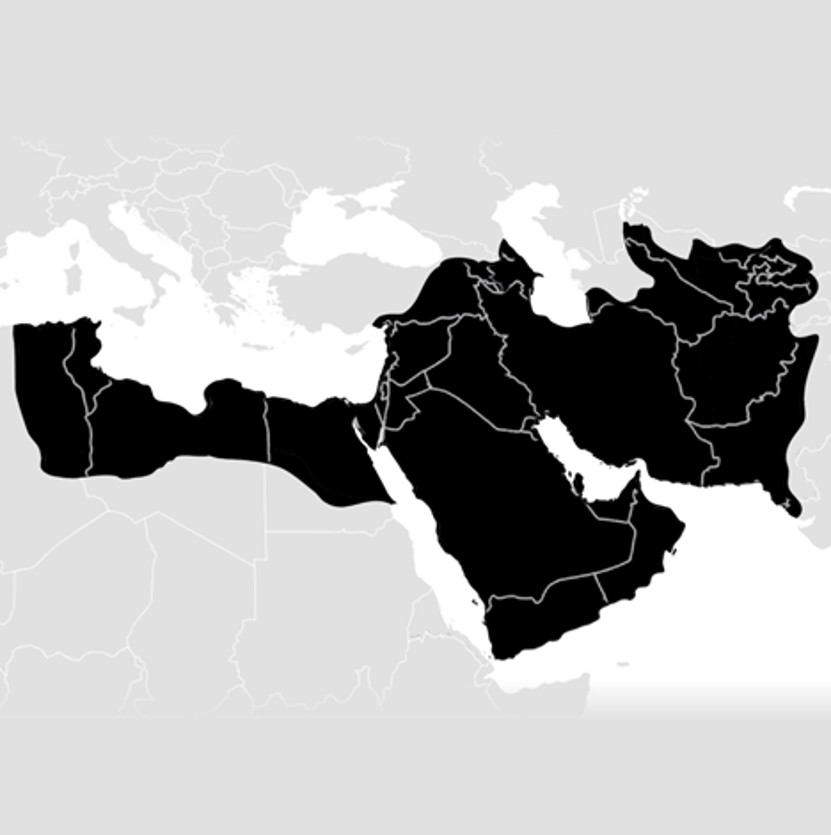
Episode 122: The Early Abbasid Caliphate
From 750-861, a dynasty of ten caliphs seated in modern-day Iraq ruled one of history’s largest empires. The territory they lost and won, the wars they fought, and the cultural renaissance that they helped usher in all had far reaching impacts on world history.
| Read Transcription | References and Notes |
| Quiz | |
| Episode on Spotify | Episode on Apple Podcasts |
| Previous Show | Next Show |
Episode 122: The Early Abbasid Caliphate
Gold Sponsors
David Love
Andy Olson
Andy Qualls
Bill Harris
Christophe Mandy
Jeremy Hanks
John David Giese
KelleyGr
Laurent Callot
Maddao
ml cohen
Nate Stevens
Olga Gologan
Steve baldwin
Silver Sponsors
Lauris van Rijn
Alexander D Silver
Andreu Andreu i Andreu
Basak Balkan
Boaz Munro
Charlie Wilson
David
Devri K Owen
Ellen Ivens
Evasive Species
Hannah
Jennifer Deegan
John Weretka
Jonathan Thomas
Julius Barbanel
Michael Sanchez
Mike Roach
rebye
Top Clean
Sponsors
Katherine Proctor
Carl-Henrik Naucler
Joseph Maltby
Stephen Connelly
Chris Guest
Sander
Matt Edwards
A Chowdhury
A. Jesse Jiryu Davis
Aaron Burda
Abdul the Magnificent
Aksel Gundersen Kolsung
Alex Metricarti
Andrew Dunn
Anthony Tumbarello
Ariela Kilinsky
Arvind Subramanian
Bendta Schroeder
Benjamin Bartemes
Berta Kienle
Brian Conn
Carl Silva
Cat Peterson
Charles Hayes
Chief Brody
Chris Auriemma
Chris Brademeyer
Chris Ritter
Chris Tanzola
Christopher Centamore
Chuck
Cody Moore
Daniel Stipe
David Macher
David Stewart
Denim Wizard
Dominic Klyve
Doug Sovde
Earl Killian
Eliza Turner
Elizabeth Lowe
Eric
Eric McDowell
Erik Trewitt
JK Huysmans
Francine
Friederike Otto
FuzzyKittens
Garlonga
Glenn McQuaig
J.W. Uijting
James McGee
Jason Davidoff
Jay Cassidy
JD Mal
Jillyp
Joan Harrington
joanna jansen
John Barch
John Sanchez
John-Daniel Encel
Jonah Newman
Jonathan Whitmore
Jonathon Lance
Joran Tibor
Joseph Flynn
Joshua Edson
Joshua Hardy
Kathrin Lichtenberg
Kathy Chapman
Kyle Pustola
Lat Resnik
Laura Ormsby
Le Tran-Thi
Leonardo Betzler
Lori Gum
Maria Anna Karga
Mark Griggs
MarkV
Martin Schleuse
Matt Hamblen
Maury K Kemper
Michael
Mike Beard
Mike Sharland
Mike White
Morten Rasmussen
Mr Jim
Nassef Perdomo
Neil Patten
noah brody
Oli Pate
Oliver
Paul Camp
Peter Goldstein
pfschmywngzt
purden@verizon.met
Richard Greydanus
Riley Bahre
Robert Auers
Robert Brucato
De Sulis Minerva
Rosa
Ryan Booth
Ryan Goodrich
Ryan Shaffer
Ryan Walsh
Ryan Walsh
Shaun
Shaun Walbridge
Sherry B
Sonya Andrews
stacy steiner
Steve Grieder
Steven Laden
Stijn van Dooren
Stuart Sherman
SUSAN ANGLES
susan butterick
Susan Hall
Ted Humphrey
The Curator
Thomas Bergman
Thomas Leech
Thomas Liekens
Thomas Skousen
Thomas Woolverton
Tim Rosolino
Tod Hostetler
Tom Wilson
Torakoro
Trey Allen
Troy
Valentina Tondato Da Ruos
vika
Vincent Vandeven
William Coughlin
Xylem
Zak Gillman
Between 750 and 861, the golden age of Islamic history began. From Tunisia to Kyrgyzstan, a dynasty of ten caliphs held sway over many of the most densely inhabited regions of Earth. The city of Baghdad was founded, along with its House of Wisdom, one of history’s most famous libraries and academies. The caliph al-Ma’mun launched a major translation movement to bring knowledge of Greek philosophy, medicine, and science into Arabic texts. Literature flourished in prose and verse, under the pens of writers still widely read today. Society under the Abbasid caliphs was sprawling and diverse, with the Umayyad Arab hegemony slowly giving way to a more heterogeneous patrician and intellectual class. If we imagine the Islamic golden age as a long, bright day, the years between 750 and 861 were its morning, and the time when social and economic systems were established that catalyzed the flowering of Islamic art and science over the next few centuries. And while these secular developments were central to later Islamic history, Islam itself underwent important developments during the early Abbasid caliphate, as well.
Just as Christianity was still very much in development a century and a half after the death of Jesus, in the year 750, Islam was still being codified and buttressed by a textual tradition far larger than the Qur’an. The four doctors of Islamic law worked during the early Abbasid period, these being Abu Hanifa, Malik ibn Anas, ash-Shafi’i, and Ahmad ibn Hanbal, thinkers whose legal frameworks still subdivide the world of Sunnism today. The imam Ja’far al-Sadiq, Muhammad’s great great great grandson, and one of the main figures in Shiism and Sufism, concluded his career in the early decades of the Abbasid caliphate. Around the end of the years between 750 and 861, a number of the most important Sunni hadith compilations were well underway, compilations that would prove second only to the Qur’an in Sunnism, forever after. Foundational works on early Islamic history came into being, as well, including those of ibn Ishaq, ibn Hisham, al-Waqidi, and ibn Sa’d. And toward the end of the period between 750 and 861, the Mu’tazilite movement, a movement focused on applying reason to theological conundrums, became a flashpoint of controversy in the Abbasid empire.
What is perhaps most important to understand about the early Abbasid era is that during this caliphate’s first century, the early history of Islam as we know it today was written, just as the later history of Islam was set in motion. The early biographies of Muhammad that are still read today, and the Jahili literature and history still studied today, comes down to us from early Abbasid writers, and early Abbasid writers also formulated the law codes, exegeses, theological debates, and many of the prophetic traditions still central to Islam today. Between 750 and 861, then, the Islamic present created the Islamic past and future simultaneously. Few other dynasties have presided over a period as pivotal to world history as the first ten Abbasid caliphs.
They ruled over a gigantic and topographically diverse empire. It included the Arabian Peninsula, and the Sawad, or Black Land of the Tigris and Euphrates, of course. But the caliphate also held the snow-capped peaks of the Zagros and the rugged territory around the Oxus, the lush wetlands around the mouth of the Indus, the chilly Iranian steppe and the sweltering Egyptian Nile, the leafy southern shore of the Caspian Sea and the long miles of the Helmand River, the Georgian Black Sea coast, and the heterogeneous populations of the Levant. The flag of the Abbasid caliphate was a rectangle of uniform black. Looking at it, we might imagine an empire, stretching from Tunisia to Kyrgyzstan, similarly uniform in nature, ruled by one dynasty and one religion. But the Abbasid caliphate, like the Roman empire before it, was a patchy dominion with many gradients and hues, staked into cities and garrisons, but thin in the countryside and leaky along borders.
So let’s take our first few steps into the Islamic golden age, an epoch on which we’ll ultimately spend multiple seasons. We will begin the story of the Abbasid caliphate from 750-861 not at the beginning, but just a bit before the beginning, and review what we learned last time about the Abbasid revolution – that series of events that, over the second half of the 740s, ended the power of the Umayyad dynasty. [music]
The Rise of the Abbasid Dynasty
The Umayyads, who ruled from 661 to 750, ultimately made two mistakes. The first mistake was nepotism. The second, related mistake, was often ignoring the egalitarian doctrines of Islam and creating a civilization in which some Muslims were more equal than other Muslims. Especially in Iraq, and in the eastern region where present-day Iran and Afghanistan come together, discontent at the Umayyad regime’s discrepant policies had reached a boiling point by the late 740s. The Umayyads were a Syrian regime, and they lorded their clan ties and old Arabian roots over everyone in the empire, their provincial appointees sucking tax revenue from all over and channeling it into Umayyad coffers. Many subjects were opposed to them for many reasons, but it was, again, the late 740s when discontent finally flared into a successful revolution.The Abbasid revolution had long, complex roots. Throughout the Umayyad period, more and more from 661-750, subjects of the caliphate had begun to look at the Umayyad rulers as corrupt interlopers who had usurped leadership of the Islamic world. Dissidents of the Umayyad caliphs had many ideas about who should be on the throne. On one side, there were those who, following ancient Arabian customs, thought that each new ruler ought to be selected through inter-tribal consensus, and that religious leadership was not necessarily the prerogative of the caliph. On the other side was a diverse polity who, as decades passed, rallied behind different descendants of the Prophet Muhammad, believing that God had invested these descendants with the capacity for both sacred and secular leadership. This second group can loosely be called Shi’at Ali, or the party of Ali, often called the Alids in modern scholarship. Shi’at Ali, during the Rashidun Caliphate of 632-661, can be understood fairly simply as supporters of Ali ibn Abi Talib, the Prophet’s cousin and son-in-law, and his two sons Hasan and Husayn. As the decades of the Umayyad caliphate stretched onward, though, Shi’at Ali began to rally behind different leaders, including Zayd ibn ‘Ali, a great-great-grandson of Muhammad, and ‘Abd Allah ibn Mu’awiya, a descendant of ‘Ali’s brother Ja’far, and thus not actually a genetic descendant of Muhammad.1 While the candidates that they backed changed from generation to generation, what the Shi’at Ali shared was a revolutionary optimism that leaders existed who, once enthroned, would begin a fairer and more righteous era of Islamic history.
There were, then, throughout the Umayyad caliphate of 661-750, Muslim subjects who wanted new, meritocratic leadership selected by consensus, and what we might call a partial partitioning of church and state. And then there were Muslim subjects who believed that Muhammad’s descendants, once brought in to lead as imams, would set things on a better course. While these two groups, just prior to the Abbasid revolution, had significantly different ideas about who ought to lead the Islamic empire, they strongly agreed that the Umayyad caliphs should not be in charge. The Abbasid revolution took place during the late 740s, when the millenarian ideas of the Shi’at Ali converged with the broader dissent of other groups in the Umayyad empire. The Abbasid revolution took its name from Muhammad’s paternal uncle, Abbas ibn Abd al-Muttalib, as it was the descendants of this uncle, the first Abbasid caliph, as-Saffah, and then as-Saffah’s brother, al-Mansur, who assumed leadership after the revolution.
It was thus the descendants of Muhammad’s uncle, rather than Muhammad himself, who, in the year 750, became the new kings of the Islamic world. Their enthronement was heartbreaking to the Shi’at Ali, who wanted the same thing they’d already sought for a century – Islamic leadership held by the genetic descendants of the Prophet. The Abbasid regime was equally dissatisfying to purist sects of Islam like the Kharijites and Ibadis, to whom the Abbasid revolution simply looked like one clan of Arabs pirating power from another clan of Arabs, and for the sake of worldly gain, rather than any revitalization of Islam; a new greedy boss, same as the old greedy boss. But inasmuch as some groups within the Islamic world in the year 750 reeled at the thought of Abbasid leadership, many did not. The Abbasids were, if nothing else, a clean start. The Abbasids had never opposed the Prophet, like the old Umayyad patriarch Abu Sufyan had. The Abbasids had never killed the Prophet’s grandchildren, like the Umayyads had. The Abbasids might not have been the direct descendants of Muhammad, but they were still Hashemites – in other words, leaders from Muhammad’s own clan. For all of these reasons, then, the Abbasids, when their first leader declared himself caliph on October 31st, 749 in Kufa, had as decent a chance as any group at holding power in the gigantic empire. Centrist, of acceptable pedigree, and otherwise embodying a reasonable cross section of what many had wanted across the caliphate, the Abbasid regime would ultimately be one of the most successful dynasties in history. [music]
The Abbasid Caliphate’s First Few Years
Real political revolutions are very messy. They begin due to fortuitous coalescences of forces. Then a goal is achieved – usually something is overthrown. Then there is a period of equilibrium and often recidivism, and fissures appear in the coalition that catalyzed the revolution, such that powerful members of a previous regime are able to retain some of what they had before. All of this was the case with the Abbasid revolution, which, to put it very cynically, replaced an old avaricious clan monarchy with a new avaricious clan monarchy somewhat more adept at leading and with less ethical baggage.
Frankish diplomats came to Baghdad in 797. In European and American history, the story of the embassies between the Franks and Abbasids have proved especially fascinating, making this one of the more enduring images of the whole early Abbasid period. The painting is Julius Köckert’s Harun al-Rashid receiving a delegation of Charlemagne in Baghdad (1864).
Though Umayyad power was a thing of the past by 752, and although the first Abbasid caliph as-Saffah had declared himself ruler, the caliphate was a gigantic landmass, with various regions that wanted to go their own way. On the west side of the Zagros Mountains, the Abbasids made government a family business, taking control of many of the most important governmental and military posts. Not everyone was elated at the clan’s manifold seizures of power in the west. Powerful families in the old Umayyad headquarters of Syria keenly missed the ousted leadership. But by and large, for a new regime, the Abbasids had a reasonable degree of control over the western half of the empire.
And then, there was the east. On the east side of the Zagros Mountains, the Abbasid revolutionary leader Abu Muslim, as of the early 750s, ruled much of what is today Iran as an autonomous kingdom. Charismatic, shrewd, and as history would soon prove, revered by many native Persians, Abu Muslim was a significant threat to the first two Abbasid caliphs. This was the state of the very early Abbasid Caliphate in the year 754, when its first caliph, as-Saffah, died. The western half was ruled by an old Quraysh clan. The eastern half was ruled by Abu Muslim, the revolutionary who had helped the Abbasids to power, but then, quietly and carefully, maintained power.
It is worth pausing here for a moment and talking about a specific region of the Abbasid empire. This region is called Khurasan. Understanding what and where Khurasan is is essential for understanding the early Abbasid caliphate, so let’s get it in our minds – Khurasan, Khurasan, Khurasan, spelled K-H-U-R-A-S-A-N. Khurasan, in the early 750s, was an immense region in the northeastern Abbasid empire. Its boundaries today encompass the hot and dry stretches of eastern Iran, the southeastern shore of the Caspian Sea and lowlands of southeastern Turkmenistan, and almost all of Afghanistan, to the north, abutting the Oxus River. It was and is an ecologically diverse region with many natural resources. Though lacking a central agricultural cash cow like the Nile or Tigris and Euphrates floodplain, Khurasan not only had a wealth of unique minerals. It was also the region where silk road goods entered the Islamic empires, just as they had previously entered Persian empires.
Just beyond Khurasan was a region that historians of antiquity often call Transoxiana, or the north bank across the Oxus River. Transoxiana included excellent farmland fed by water coming out of the mountains of Tajikistan, and its cities, sometimes controlled by Islamic empires during the Middle Ages, and at other times, other groups, were hubs for east Asian goods on their way to the west. Khurasan, then, which was at the northeastern extremity of the early Abbasid empire, was, especially after the 700s, an extremely important and influential place during the Medieval period. Early Iranian dynasties were rooted there, and from end to end of the Middle Ages, all the way up until the Mongols invaded in the 1200s, Khurasan was the cultural epicenter of Persia – the home of Avicenna, al-Biruni, Omar Khayyam, and other heavyweights of intellectual history. Sometimes expanding to the north bank of the Oxus, and at other times not, Khurasan was a gigantic, spongy region capable of going its own way even when Abbasid Baghdad was at its mightiest, as was the case when the de facto eastern revolutionary leader Abu Muslim, in the year 754, held power in Khurasan, not particularly concerned with what was going on 1,000 miles over to the west in Baghdad. So, that’s Khurasan, again centered at the juncture between modern day Iran, Afghanistan, and Turkmenistan. Khurasan was where the Abbasid Revolution began, and whenever major events happened in early Abbasid history, Khurasan was usually involved.
The Difficult Early Reign of al-Mansur (r. 754-775)
When the first Abbasid caliph As-Saffah died in 754, his brother, Abu Ja’far, better known as al-Mansur, came to power. Al-Mansur, one of the most famous and successful of all the Abbasid caliphs, would be on the throne from 754-775. While al-Mansur achieved a lot during his long reign, and in many ways can be thought of as the first Abbasid caliph proper, as of 754, when Al-Mansur inherited the Abbasid throne from his brother, the paint on this throne had barely had a chance to dry. The second Abbasid caliph al-Mansur had foes on the west side of the Zagros who resented him for economic reasons, and in Iran, Abu Muslim ruled an entire hemisphere of the caliphate, with powerful Persian families in far-off Khurasan keen on backing a separatist eastern state. And everywhere, east and west, many Muslims who had crossed their fingers during the Abbasid ascension from 750-754, as historian Hugh Kennedy puts it, “found that, instead of a new society, based on the Qur’an, justice and the equality of all Muslims, led by a divinely elected imam, they had simply replaced one ruling elite with another and that a substantial section of the old elite had actually been incorporated in the new.”2
A depiction of al-Mansur from a sixteenth century Ottoman genealogy.
Their conflict began with a provocation. Al-Mansur offered the eastern revolutionary Abu Muslim a governorship – Abu Muslim could govern the rich province of Egypt, or of Syria. Abu Muslim declined. He did not want to come over the Zagros Mountains and rule a single province of the caliphate. He already ruled its entire eastern half. Al-Mansur was prepared for this rejection. The Abbasid caliph was able to compel Abu Muslim into a meeting with him. At the meeting, the caliph leveled treasonous accusations against the revolutionary who had helped him to power. And Abu Muslim, without whom the Abbasid Revolution would never have taken place, was executed in February of 755. His death marked the end of the Abbasid caliphate’s birth pangs. Abu Muslim remains a somewhat mysterious figure, swept under the rug by Abbasid historiography. To many Persians in the mid-750s, Abu Muslim’s death marked the end of a short-lived dream of the return of an autonomous Persian state, led by a Muslim seated in present-day Iran and an ethnic Persian more sensitive to the nuances of former Sasanian territories than a caliph enthroned in faraway Iraq or Syria. From the caliph al-Mansur’s perspective, though, Abu Muslim’s refusal to govern in the west meant that Abu Muslim was an existential threat to Abbasid rule. Al-Mansur, as we’ll see in a moment, had big plans, and there was no place in those plans for a semi-sovereign eastern division of the empire with an overwhelming majority of Persian speaking citizens.
When Abu Muslim died – again in early 755 – an uprising occurred which demonstrated the extent to which many Persians saw Abu Muslim as a way forward for Persian independence. An Iranian named Sundabh led a rebellion which aimed to do nothing less than restore Persia to Persian rule, revitalize Zoroastrianism, and eventually, to destroy the Kaaba itself. Sundabh’s rebellion got traction quickly, taking over a town just south of modern-day Tehran and receiving support from an area called Tabaristan, roughly speaking the rugged southern shore of the Caspian Sea. This rebellion heralded more to come. Old families of the Sasanian empire, faithful Zoroastrians, and average Persians alike resentful of the new Arab-Islamic hegemony all had cause to rebel against Abbasid rule, just as they had had cause to rebel against Rashidun and Umayyad rule. Abu Muslim’s death, to these Persian rebels, meant that the significant role they had played in the Abbasid revolution had resulted in nothing more than the continued ascendancy of an Arab-Muslim regime from far away. Persian insurgencies, and moreover insurgencies in the Abbasid east, would be a fixture for long durations of the caliphate’s history. In 755, however, the Persian revolutionary Sundbah’s army was defeated, and hopes for a Persian resurgence were decisively disappointed for a generation.
So, let’s turn our full attention to al-Mansur, now, again one of the most famous caliphs in all history, on the throne from 754-775. Al-Mansur, as we’ve just learned, had immediate military challenges to contend with when he ascended to the throne. He also faced ideological challenges. One of the most volatile ideological forces in the newborn caliphate was what we can call messianism – in other words, the belief in a coming messiah. A main accelerant of the Abbasid revolution was the notion that a savior figure would take the reins of the caliphate and lead people to a better tomorrow. Al-Mansur was not the descendant of Ali ibn Abi Talib that the various Alid uprisings had sought. And al-Mansur, in addition to his Abbasid successors, found the messianic beliefs of the Alids and other groups to be especially intractable.
We have, in our podcast, learned about many imperial ascensions, after which an emperor placates, exiles, or executes his obvious rivals, and then is able to rule and get things done. The Abbasid regime faced a unique challenge with the Alids, however, because there were many descendants of Ali, and their supporters rallied behind them at different times and different places, and each one, according to his backers, had a divinely ordained claim to sovereignty. If an Abbasid emperor favored a descendant of Ali and his supporters, then that Alid rose to more dangerous prominence within the empire. If an Abbasid emperor persecuted or executed a real Alid, then the emperor found himself in the dreadful position of harming a descendant of the Prophet Muhammad, which was not only morally unconscionable, but also created a martyr and catalyzed more messianic support against the Abbasid regime.
Al-Mansur dealt with this issue as best he could. Between 755 and 762, two Alid brothers, “Alid” again meaning descendants of Ali, first evaded and then rebelled against the caliph Al-Mansur. One brother eventually led a rebellion from Medina and died fighting Abbasid forces, and the other led an urban revolt in Basra, which, with more difficulty, was put down in 763. A letter survives in the historian at-Tabari in which al-Mansur decries Alid claims to the Abbasid throne. To be clear, all Alids were genetic descendants of the Prophet’s daughter, Fatima, and in the letter you’re about to hear, al-Mansur emphasizes that the Abbasids, descended from Muhammad’s male relatives, are better suited to rule than the Alids, descended from Muhammad’s daughter. Al-Mansur states in the letter to his Alid challenger, “Now if your pride glories in the kinship of women, in order to delude thereby the uncouth and the rabble, still God does not make women the equal of paternal uncles and forefathers nor like the paternal relatives and male kindred, for God has made the paternal uncle like a father, and in His Book gives the mother a lower place.”3 While al-Mansur perhaps did believe that there was some theological justification for Abbasid rule rather than Alid rule, the Shi’at Ali who had already been backing Ali and his descendants didn’t agree. The suppression of their rebellions was arduous, but Abbasid leadership managed it. Though messianic Alid sentiments were never going to go away, as the winter of 763 gave way to spring, the caliph al-Mansur had finally guided the Abbasid caliphate past its nascency. Born out of a patchwork of revolutionaries, the new empire had taken a while to stabilize, its volatile east and internal factionalism making the Abbasid throne precarious for its first decade. Al-Mansur, however, even during his initial years of rule, had done more than grimly shoring up power. Al-Mansur, though he had some hurdles to jump during his first few years on the throne, intended to leave an impressive legacy behind, and in this, he certainly succeeded. [music]
Al-Mansur’s Founding of Baghdad and Sponsorship of Arts and Sciences
Let’s talk about some of the things that al-Mansur accomplished between 754 and 775 as the second caliph of the Abbasid empire. We have already discussed the military and political snafus that al-Mansur had to navigate during his first years on the throne, and so we can begin by quickly talking about the first Abbasid military. From the increasingly detailed annals of early Abbasid history, we can begin to get a sense of how the caliphate’s army was structured, and how it worked. There were, interestingly, what we can think of as military dynasties at work beneath the imperial dynasty. Military leaders known as quwwad, or generals, oversaw divisions of troops, and Abbasid generals passed military leadership down to their heirs. A hierarchy was thus ingrained in the early Abbasid caliphate, wherein the caliph appointed leadership to generals, often members of the Abbasid clan, who themselves handed subdivisions of military leadership down to their heirs. The political and military apparatus of the early caliphate, then, was largely a family affair, somewhat insulated from the ambitions of interlopers.Al-Mansur also paid the military well, and apportioned land to those who served. Early Abbasid records attest 80 dirhams a month for each soldier in the regular army – by contrast, laborers building cities in what is today Iraq were making just one or two dirhams per month, and so military service was a lucrative line of work.4 While al-Mansur funded the military well, the Abbasid clan more generally was able to align and collaborate with extant interests throughout the 750s, such that after the aforementioned insurrections wound down in 763, the caliphate enjoyed a period of relative peace.

Baghdad, a few decades after its foundation, had grown around the fortified round city and ballooned over to the east bank of the Tigris. It would be the epicenter of a lot of early Abbasid history.
Baghdad’s heart was the Round City, home to Al-Mansur’s palace, military quarters, and buildings that housed wings of the governmental administration. To the city’s northwest, military leaders were given plots of land, and soon the city spread to the east bank of the Tigris, as well. The area exploded in population between Baghdad’s founding in 762 and the end of the century, growing to perhaps half a million inhabitants by 800.5 Various satellite palaces grew over the early Abbasid period, and way up along the Syrian Euphrates, near the present day city of Raqqa, Al-Mansur founded the city of Rafiqa, likely a predominantly military outpost designed to manage the circulation of troops up along the Byzantine frontier.
Abbasid Baghdad, especially early Abbasid Baghdad, is one of history’s most famous places, comparable to Periclean Athens, Augustan age Rome, and 18th-century Paris, so it’s worth pausing for a moment to talk about the city’s first century. The centrality of Baghdad allowed it to become a hub of commerce and luxury nearly unique at that point in world history. A cosmopolitan metropolis at the seam between Europe and Asia, you could meet people from all over the world on the streets of Baghdad. In the later decades of the 700s, the Chinese travel writer Du Huan, after visiting Baghdad, remarked that “Everything produced from the earth is available there … Brocade, embroidered silks, pearls, and other gems are displayed all over markets and street shops.”6 Just as Baghdad was full of diverse goods, it was also theologically diverse. Built in a scenic bend of the Tigris, the city became a center of operation for Nestorian Christianity, and Jews, over Baghdad’s first century, moved academies from southern Iraq up to Baghdad, which became a center for Jewish learning. About a century after Baghdad was founded, the historian al-Tabari notes offhandedly that in the year 858, “the Festival of Sacrifice of the Muslims, Palm Sunday of the Christians, and Passover of the Jews coincided.”7 There is a sense here that these were public holidays that everyone knew about and that their falling on the same day was a coincidence curious enough for all practitioners of Abrahamic religion living in the city to note.
The second Abbasid caliph al-Mansur did something else between founding Baghdad in 762 and his death in 775. This was funding a great deal of writing. The most ambitious emperors in world history have not only tried to control the present and future. They have also endeavored to control the past. We began this season of the Literature and History podcast with a synopsis of Pre-Islamic Arabic poetry. Much of this poetry was assembled by the literary historian Mufaddal adh-Dabbi on behalf of the caliph al-Mansur. Al-Mansur also sponsored the biographer Ibn Ishaq, whose name we heard so often in episodes about the life of the Prophet Muhammad. Ibn Ishaq, who died in 768, completed his biography on Muhammad at the apex of al-Mansur’s reign, and the next major biographer, al-Waqidi, came of age during this same reign, writing his own Sira, or prophetic biography, under some of the most famous Abbasid caliphs. The historical accuracy of the Sira, or biographical literature about the Prophet Muhammad, as we’ve discussed in past episodes, is ultimately hard to determine. Enough of it sounds like hagiography that we can assume a fair amount of fiction went into Abbasid biographies of Muhammad. Where the early biographers Ibn Ishaq and al-Waqidi most likely did create some innovations are sections of their biographies dealing with Muhammad’s uncle al-Abbas ibn Abd al-Muttalib. Al-Abbas, from whom the Abbasids traced their lineage, became a prominent figure in Abbasid period biographies that are still popular today. Muhammad’s uncle, in ibn Ishaq and al-Waqidi, becomes a sagely figure in tune with the meaning of the Qur’an, and in the biographer al-Waqidi, uncle al-Abbas is more worthy of leadership than Muhammad’s son-in-law Ali. We have seen these sorts of revisionist history moves before, under different historical regimes. Augustus wanted his Julio-Claudian ancestors to be figures at the very foundations of ancient Roman history, and the poet Virgil took care of that for him. Constantine wanted to be the summit of Christian cosmic history, and Eusebius made it happen. In much the same way, the Abbasids wanted their rule to appear divinely consecrated, and historians willing to give the Abbasid patriarch Abbas a bit of extra sheen and sparkle had powerful incentives to do so.
Al-Mansur’s Succession
Al-Mansur and his successors, then, commissioned what historian Tayeb El-Hibri calls “the most critical phase in the shaping of Islamic textuality and culture.”8 We’ll talk more about the literary culture of the early Abbasid caliphate in lots of future episodes – the work of the poet Bashshar ibn Burd and the translator Ibn al-Muqaffa, both active during the early Abbasid period, and both ethnic Persians who spent their careers in Iraq, shows the confluence of Persian and Arab culture in Mesopotamia that so thoroughly characterized the Abbasid empire’s first century.It wasn’t all smooth sailing for the second Abbasid caliph al-Mansur after he founded Baghdad and fended off his major rivals. About a year after al-Mansur founded Baghdad in 762, and for much of the remainder of his reign, he faced a complex problem. This was the issue of succession. Al-Mansur’s brother, the first caliph, As-Saffah, had chosen a successor for Al-Mansur – this was the nephew of the two brothers, a young man named Isa ibn Musa. At the time, in the turbulent early 750s, the backup succession plan had been geared to ensure the longevity of Abbasid power. However, once al-Mansur had settled into his new throne room in Baghdad, and eliminated the major rival movements to his power, he wanted his son to take over as caliph after he died, rather than his nephew. Al-Mansur’s son Muhammad, known today as al-Mahdi, though young, was popular in the military, and as the Abbasid caliphate continued to flourish, al-Mansur’s son al-Mahdi seemed to many like a ticket to continued prosperity.
Al-Mansur, then, attempted to convince his nephew Isa ibn Musa to relinquish his claims to the throne. Al-Mansur tried several different strategies, but eventually it was the Abbasid military’s strong support of the son, rather than the nephew, that led Isa ibn Musa to give up his claim to the throne. The way for the third Abbasid caliph, al-Mahdi, was now clear. Al-Mansur died in the autumn of 775, while leading a pilgrimage to Mecca. In his mid-sixties, the caliph had reigned for more than twenty years, and in doing so, had brought the Abbasid state to healthy maturity. Al-Mansur had not been the messiah that many had wanted. He had left in place systems and legacies from the previous century that privileged some Muslims greatly above all others. But al-Mansur’s practical, restrained, intelligent oversight of the empire had fostered stability and security, and when his son al-Mahdi took the throne in early October of 775, the young man inherited a functional, healthy state.
Al-Mansur, between 754 and 775, all told, had proved a deft, talented leader; a harsh strongman who consolidated a dynasty in the disorderly aftermath of a revolution, but also an intelligent emperor with both foresight and restraint. He is, in hindsight, noted for his combination of authoritarianism and guile; his delegation as well as careful selection of bureaucrats and appointees, and his willingness to micromanage and involve himself in the minutiae of the state. He set his sons and grandsons up for peaceful, prosperous reigns, and over the next 35 years, his immediate descendants presided over a flourishing empire. [music]
The Ascension of the third Abbasid Caliph al-Mahdi (r. 775-785)
In 775, the third Abbasid caliph, al-Mahdi, ascended to the throne. He was in his 30s. His career, which had begun early, during his teenage years, had been a military one, based, early on, near what is today Tehran. In 764, the announcement went out that al-Mahdi would be his father’s heir, and al-Mahdi came west to join his father al-Mansur in the greater security of Baghdad. Father and son ruled together for eleven years, such that when al-Mahdi became a caliph in 775, he was militarily and politically experienced enough to be prepared for the role. His reign of ten years was relatively short, as far as caliphal reigns go, but it was also successful.Al-Mahdi’s ascension to the throne was a smooth one. Al-Madhi was well-liked in the military, and appreciated as liberal with the caliphal treasury, funding the construction and enlargement of some important mosques. As a spiritual leader, al-Mahdi was a different creature than his father, who had been a secular monarch more than an active Muslim figurehead. Al-Mahdi funded improvements to the road between Iraq and Mecca, so that pilgrims could more safely stop at watering holes and waystations, and ordered the elimination of partitions in mosques between regular worshippers and then leaders and potentates in the audience. These benign acts in the service of Islam, however, were counterbalanced by less benign ones. Al-Mahdi supported sporadic persecutions of those who rejected Islam, and gave a Chrisitan Arab tribe called the Taghlib the choice between conversion and death, although he seems otherwise to have treated Christian citizens according to Qur’anic precepts for clemency.
Al-Mahdi, as 775 turned to 776 and 777, faced some of the same challenges his father had. The new caliph wanted to pass power onto his son, although his cousin Isa ibn Musa had been promised the throne next, just as he had been the one intended to take the throne rather than al-Mahdi himself in the first place. Isa ibn Musa was given another payoff and swept under the rug once more, living the rest of his life out in what is today northern Iraq. In addition to than Isa ibn Musa, al-Mahdi also had to manage relations with the Alids, those descendants of Ali and the Prophet Muhammad whom many in the empire thought should be on the caliphal throne.
There were numerous Alids active during the early Abbasid dynasty. Some, like the revered Imam Ja’far as-Sadiq, stayed out of politics, passing on the traditions of the Prophet’s inner family and contributing to Islamic history with the hadiths and other writings they left behind. Other Alids were more politically active. The caliph al-Mahdi, who again came to the throne in 775, seems to have treated key Alids with proactive generosity rather than paranoid harshness. Medina, as it had been a century before, was a center of Alid activity, and al-Mahdi showered money on the city and its Alid-connected families in order to demonstrate that he was glad to have them in the empire. Al-Mahdi’s largesse to the Alids didn’t solve the Abbasid dynasty’s long-term problem with the presence of the Shi’at Ali in the empire, but diplomacy toward the Alids probably protected al-Mahdi from any especially serious Alid challengers to his rule while on the throne.
Al-Mahdi and the Rise of the Barmakids

A member of the Barmakid family offering gifts to the Abbasid caliph, in a Mughal manuscript from the late sixteenth century.
The subject of a government bureaucracy doesn’t sound like a thrilling one at first glance. Bean counters in cubicles, so to speak, aren’t stereotypically as exciting as cavalry charges or naval salvos. However, during the early Abbasid period, a lot of interesting things were happening in the world of government departments. The years of al-Mahdi’s reign – again 775-785 – saw the old Umayyad and Rashidun distinctions between Arab Muslims and other Muslims softening. At the level of government bureaucracy, when an administration needed a director of postal service, or taxation, or transportation, that director didn’t need to be an esteemed Arab Muslim of noble extraction. In fact, it was often better for the Abbasid regime to just find a freedman or otherwise lowborn imperial subject. If, as a caliph, you hired a nobody, that nobody’s allegiances were going to be toward you, and toward their career, rather than toward enriching their familial or clan connections. The Kuttab, then, or bureau of government officials, and beneath them the Abbasid bureaucracy, became a meritocratic vehicle for hardworking individuals of various extractions, which, of course, was good for the health of the empire. As scholar Hugh Kennedy writes, the Kuttab quickly became “a highly educated élite of administrative secretaries. . .the mandarins of the early Islamic world, whose power and wealth were based on the fact that they alone could administer the revenue-collecting machinery on which the regime depended. . .they were also important as patrons of poets and prose-writers alike.”9 In particular, an Iranian family called the Barmakids flourished in al-Mahdi’s bureaucracy. These Persians, of old Sasanian extraction, distinguished themselves at various echelons of the Abbasid civil service. By the end of al-Mahdi’s ten-year reign in 785 – a central government had emerged in Baghdad whose general caliphate-wide interests were sometimes at odds with those of regional governors and military leaders.
Al-Mahdi’s reign, in spite of two expeditions against the Byzantines and one further afield in modern-day Pakistan, was generally a peaceful one. Later historians memorialized al-Mahdi’s ten years on the throne as politically peaceful and unexciting, and al-Mahdi seems to have been a generous, sophisticated, inquisitive, friendly person fond of hunting. One of his most famous exploits was purchasing a famous singer and musician from Medina and making her his concubine, and with this concubine, siring Ulayya bint al-Mahdi, who would herself be poet and musician, and fixture in the next generation of Abbasid court life.
The Caliphate of al-Hadi (r. 785-786)
The caliph, in his 40s in the 780s, had two sons eligible to rule, and he named both as successors. To use their later caliphal names, the older brother al-Hadi was to rule first, and then, in the event of al-Hadi’s death, ar-Rashid was to take his place on the throne. This sort of arrangement is always problematic, but without going into any great detail, when the caliph al-Mahdi died in a hunting accident in 785, his older son al-Hadi, about 22 years old, ascended to the throne, as his father al-Mahdi had intended, and the younger son, ar-Rashid, settled into a life comfortably away from the public eye.The older son al-Hadi’s caliphate was brief – a little over a year. He treated the Alids, again the descendants of Muhammad’s son-in-law Ali, more strictly than his father had, and a minor Alid rebellion in Mecca resulted, which the Abbasids squashed in the summer of 785. Following the rebellion, an Alid leader and descendant of Muhammad named Idris ibn Abd Allah fled to what is today Morocco, where the Idrisid Dynasty was soon established in 788, a dynasty which would endure in Morocco and Algeria for almost 200 years and abet the spread of Islam in northwest Africa. Other than unintentionally abetting the Idrisid Dynasty in present-day Morocco, though, the caliph al-Hadi was unable to achieve a great deal in his brief time on the throne.
Al-Hadi, like every Abbasid we have met thus far, could not endure the thought that anyone but his own son would inherit his throne, in spite of previous familial arrangements, and a year into his reign, he was planning to ouster his brother. Al-Hadi died, however, before he was able to formally declare his young son as his chosen heir. He may have had an ulcer, and he may have been assassinated – stories about this episode in Abbasid history focus on al-Hadi and his brother ar-Rashid’s mother, who preferred the younger son over the older and evidently had some political aspirations of her own. However it happened, in mid-September of 786, the fourth, short-lived Abbasid caliph al-Hadi was gone, and his brother ar-Rashid’s supporters, acting quickly, strongarmed ar-Rashid into the throne. Ar-Rashid would have the longest caliphate of the early Abbasid period – all told, the 23 years between 786 and 809. Ar-Rashid would preside over the most golden era of the early Abbasid empire, so let’s spend a bit more time getting to know ar-Rashid.
The Early Reign of Harun ar-Rashid (r. 786-809)
If you have ever heard the name of a caliph, there’s a good chance that name is Harun ar-Rashid. A character in the 1001 Nights, a lavish patron of the arts, and the leader of a peaceful and flourishing period of Abbasid history, Harun ar-Rashid was as generous as he was ruthless, and his 23-year long caliphate, though lauded to no end by Abbasid sources and dilettantish nineteenth-century orientalists, had some different phases, some ups and downs. The image of him and his chief minister Ja’far, strolling through the streets of Baghdad engaged in leisure and chicanery, is an appealing one in the 1001 Nights, but ar-Rashid, of course, was a real person with a long and complex political career. To begin at the outset of his caliphate, in the year 786, like many hereditary monarchs in history, Harun ar-Rashid came to the throne at a young age – somewhere between 18 and 20. As a young ruler, he needed a lot of help. Fortunately for him, help was available in the form of a sizeable and seasoned bureaucracy.
Harun ar-Rashid in a late 16th century Safavid illustration.
The caliph ar-Rashid’s grandfather al-Mansur had founded the city of Baghdad with the intention of having a rich capital at the heart of the gigantic Islamic empire. Ar-Rashid presided over a period of continued centralization. The Abbasid regime and its Barmakid operatives, for the first half of Ar-Rashid’s reign of 786-809, shored up power at its center. With adept and loyal ministers at his disposal, ar-Rashid was able to diminish the importance of provincial governorships, slowly buying up and otherwise acquiring sawafi, or state lands, such that tenants and farmers paid dues directly to the caliph in strategic areas of the empire. Ar-Rashid’s own power grew, and just beneath him, the power of his Barmakid viceroys.
At first glance, the Barmakid ascendancy during the first decade and a half of ar-Rashid’s reign appears to be a recipe for a coup. After all, a shadow regime occupied in seizing bureaucratic posts in the imperial center might naturally go for broke and attempt to nab the caliphate itself. However, the Barmakids were more white-collar careerists than military crackerjacks, and they were Machiavellian only up to a point. When a number of rebellions flared up in the caliphate between 794 and 797, it became clear that military superintendence was not a Barmakid specialty, and after 797, Harun ar-Rashid, by that time over thirty years of age, leaned on his Barmakid ministers less and less.
Not everything ar-Rashid did involved bureaucratically convoluted statecraft. A moment ago, we learned that ar-Rashid’s grandfather al-Mansur had encouraged the creation of the earliest prophetic biographies. Ar-Rashid was also interested in Islam’s past, surrounding himself with a group of scholars and jurists together focused on the correct recitation of the Qur’an, and the drafting of Islamic laws based on the Qur’an, hadiths, and legal precedents. Ar-Rashid knew two of the four architects of modern Sunni law, Malik ibn Anas and al-Shafi’i, and his sons, who would both be caliphs, studied hadiths with Malik ibn Anas. Ar-Rashid’s genuine desire to help codify Sunnism for the future was matched by a shared sense of how religion can dovetail with political theater. The caliph’s southbound journeys from Baghdad to Mecca involved stops at population centers to appear before his subjects. Ar-Rashid’s wife Zubayda funded the creation of an 875-mile-long highway between Kufa and Mecca with dozens of watering stations to make sure pilgrims could get down to the central Hijaz safely from the Abbasid empire’s center.
Many of the major events from the middle part of ar-Rashid’s reign happened in the empire’s central north. Khazar raiders, coming down through modern-day Armenia, descended into Abbasid territories, and the armies of the caliphate were able to rebuff them. Closer to home, ar-Rashid, over the course of the 790s, seems to have developed an aversion to the metropolis of Baghdad, and he made his residence up in Raqqa in present-day Syria, increasingly avoiding Baghdad altogether. Additionally, ar-Rashid worked spiritedly to manage the Byzantine frontier, buttressing Abbasid control of the border, and leading the occasional campaign.
The Later Reign of Harun ar-Rashid
By the year 800, Harun ar-Rashid was in his late 30s. He still had nine years left in his reign, but he had also, by this point, been on the throne for 14 years. His style of governance over these 14 years had evolved. From relying on the Barmakid bureaucrats early on in his caliphate, he had increasingly pulled away from them. In Raqqa toward the end of his reign, though he had left Baghdad, the emperor was gathering power increasingly at the center of the caliphate by building out provincial towns with nearby bases for Abbasid troops. By the year 800, ar-Rashid was thinking about the future. Like every Abbasid leader before him, ar-Rashid wanted to pass power onto his sons. Unlike every Abbasid leader before him, ar-Rashid planned to divvy the Caliphate up, and to have his older son rule the western half, and his younger son, a half-brother of the first, rule the eastern half.The decision to divide the empire up was a strange one in many ways. Ar-Rashid’s caliphate, after all, and the caliphates of his Abbasid predecessors, had been characterized by centralization. The Abbasid empire had become strong because centralization in Baghdad helped keep its centrifugal forces in check. Dividing the caliphate into east and west, in particular, would underscore the eastern half’s already perennial tendency to turn into a culturally Persian breakaway state. Then, there was the more obvious problem that princelings do not share power well with one another, especially when each princeling has powerful, motivated backers who want to use him to further their group’s political aspirations. In spite of the manifold problems of trying to pass monarchical power down to two heirs simultaneously, as of the year 800, Harun ar-Rashid had set one son, about age 13, up in Baghdad, and the other son, also about age 13, up in Khurasan in the empire’s northeast. Power sharing agreements were drafted in the first few years of the 800s, and by 803, the terms of the coming co-rule had been established, and they were on display in contracts in the Kaaba in Mecca.

Harun ar-Rashid, Yahya ibn Khalid, and Ja’far ibn Yahya in a 19th century German edition of the 1001 Nights. The story of ar-Rashid and the Barmakids captivated several generations of nineteenth-century European intellectuals.
There is also a scurrilous and steamy story that survives about ar-Rashid killing his friend Ja’far because of Ja’far’s illicit relationship with the caliph’s sister. According to this story, Ja’far and the caliph’s sister, Abbasa, were part of ar-Rashid’s circle, and they hung out with him often. Because highborn women in the empire had to be carefully monitored in order to avoid controversy, ar-Rashid had drawn up a nominal marriage between Abbasa and Ja’far, so that the caliph could hang out with his buddy and his sister at the same time. However, so the story goes, at some point the nominal marriage got a bit too heated, and Abbasa got pregnant. She managed to have the baby in secret, but ar-Rashid found out about it. Hence, again according to this story, ar-Rashid suddenly going berserk in 803 and killing Ja’far and getting the Barmakids out of government. It’s a juicy, Suetonius-style tale of imperial intrigue, which is why I’ve just offered you the short version. But ar-Rashid’s sister Abbasa actually died in 798, and so it’s unlikely that a purge that happened five years later had to do with a princess’ sexual indiscretions.
Following the purge of leading Barmakids from government in 803, Harun ar-Rashid spent the final years of his reign between 803 and 809 absorbed in managing the affairs of the empire’s two most volatile frontiers. Ar-Rashid, in 805, funded a major attack on the Byzantine empire, in retaliation for an incursion by the new Byzantine emperor Nicephorus. This retaliatory campaign, though it didn’t result in much more for the Abbasids than the acquisition of a single new town, made excellent press for Harun ar-Rashid. Beyond the Byzantine empire, the Abbasids well knew, in the forests and mountains of central and western Europe, and the northern Mediterranean, there were more Christians.
The Abbasids had been in contact with Frankish monarchs since al-Mansur had exchanged embassies with Pepin the Short, and these embassies continued under Charlemagne and Harun ar-Rashid. Frankish diplomats arrived in Baghdad in 797, and Abbasid diplomats arrived in Pisa in 801, and later in 807. The 801 embassy, very famously, in Latin sources, brought with them an elephant – probably shipped over from Tunisia, not to mention a brass water clock, exquisite textiles, and silk robes, all unlike anything the Latin west of the early Medieval period had ever seen. Charlemagne’s court historian Einhard wrote of Harun ar-Rashid’s great esteem for the first Holy Roman Emperor in terms that are probably exaggerated. In reality, the Abbasid Caliphate and the kingdom of Charlemagne shared, for different reasons, hostility to the Byzantines, and to a lesser extent Al-Andalus, and so the two empires had some practical reasons to maintain strong diplomatic relations with one another.
More pressing to Harun ar-Rashid at the tail end of his career than the faraway frosty forests of France was the ever-volatile northeast of Khurasan. The Abbasid caliphate had been born from Khurasan, and Khurasan always threatened to become a power center to rival Iraq. Ar-Rashid led a campaign there toward the end of 808, accompanied by his son Ma’mun, who had been groomed to rule in Khurasan. Though the seasoned caliph probably planned a series of decisive victories in the northeast, ar-Rashid never made it to the frontier. He sickened near in the northeastern part of present-day Iran, near the border with Turkmenistan, and while the caliphal army proceeded onto the front, ar-Rashid, in his early 40s, died of an unknown illness. [music]
The Beginning of the Fourth Fitna (808-813)
In the early part of 809, following ar-Rashid’s death, his succession plans were put to the test. His sons were both about 22. One son, whom history would know as al-Amin, was securely enthroned in Baghdad, at the empire’s center of power. The other son, al-Ma’mun, was out on the eastern frontier, in Khurasan, surrounded by a large military. As it turned out, al-Amin and Ma’mun shared power together peacefully, and everyone lived happily ever after. Just kidding. Each co-caliph, albeit for different reasons, turned on the other. The saber rattling began almost immediately upon the death of Harun ar-Rashid, and the immensely successful first half century of the Abbasid caliphate, quite quickly came to its end.Whatever ar-Rashid had imagined happening upon his death, he seems to have forgotten a cardinal rule of the early Abbasid dynasty. And that is that when any new Abbasid caliph sat down on the Abbasid throne for more than half a second, no matter what sorts of agreements had been brokered, that Abbasid caliph would begin foaming at the mouth with the desire to pass power onto his own son, rather than any other previously discussed heir that made sense for the empire. It happened every single time, with every succession, and it happened when ar-Rashid’s son al-Amin plopped down onto the throne in Baghdad in 809. Al-Amin couldn’t possibly tolerate his equally qualified brother as a candidate for a throne for which his brother had been groomed. al-Amin had a toddler. And the most important thing in the universe was that no matter what al-Amin’s previous oaths had been, and no matter the cost in human carnage, this toddler had to be seated safely on the Abbasid throne so that the child might vomit and drool on its cushions. What did paternal and fraternal ties and the general wellbeing of an empire matter, after all, when a small infant posterior, still clad in diapers and unable to control its emissions, had not yet been guaranteed absolute power? What worth was all human life, when an infant with literally no leadership capacity whatsoever, who spent his days whimpering and mouthing his toys, had not been consecrated as the future head of state? Al-Amin wanted his son to be caliph, and so he began what would soon turn into a massive civil war called the Fourth Fitna.
The Fourth Fitna was a war between the caliph ar-Rashid’s two sons, al-Amin in the west, and then al-Ma’mun in the east. Its first phase, which we will now discuss, lasted for four years between 809 and 813. It had an enormous human cost, and although the two brothers who ended up leading the factions had backers who stoked the fires of the conflict, the war was, tragically, as preventable as any succession dispute, hence my overcooked sarcasm a moment ago.
The war began with a testy exchange between the brothers via letters, with al-Amin asking al-Ma’mun to – um – come back to Baghdad, because al-Amin – y – um needed al-Ma’mun’s advice. Al-Ma’mun declined and al-Ma’mun asked if maybe – um – could al-Amin send his family and relatives out to the east? Al-Amin declined, as these family members would be valuable hostages. Al-Amin held the main Abbasid control room when hostilities began in 809, and there, he declared that his aforementioned baby son would be the next caliph. On the other side of the mountains, Al-Ma’mun made some farsighted moves at the beginning of the conflict. Al-Ma’mun proclaimed himself as Imam – in other words, the divinely guided spiritual leader of Islam, in doing so, trying with some success to get some wind in his sails from the messianic sentiments circulating throughout the empire. Al-Ma’mun also cut off his brother al-Amin’s lines of communication to the east, thus keeping al-Amin insulated from what was going on over on the Iranian side of the Zagros Mountains.

Al-Ma’mun defeated his brother al-Amin in 813, as shown in this Persian manuscript from the late 16th century. In reality, al-Ma’mun was all the way over on the other side of the Abbasid empire when the defeat happened, so the illustrator is taking some poetic license here.
As the winter of 811 deepened, over in Baghdad, things went from bad to worse. Al-Amin, as it turned out, who had reached for the stars by setting his baby son up as an heir, had neither the leadership skills, nor the courage to back up his pugnacious ambition. The coalition that had amassed in his favor showed fissures. The most important of these fissures occurred in the western military. This military was, for a long time, staffed by lieutenants and regulars of Iranian stock, whose families had served in the Abbasid military for more than half a century, an impressive vanguard that had protected the military interests of a number of different Abbasid caliphs. These Iranian military men had failed in the conflicts of 811, and as the western half of the caliphate tried to field armies thereafter, long-held prejudices against Baghdad’s Iranian vanguard came to the surface. The western caliph al-Amin soon found that although he had military men willing to fight for him for different reasons, they weren’t necessarily willing to work together. An attempt to drum up more military support in Syria that same year also failed, and when the eastern caliph Ma’mun ordered an invasion or Iraq in the spring of 812, the eastern armies met with little effective resistance from the splintered western military.
As the army of the eastern caliph Ma’mun slashed upward through Mesopotamia toward Baghdad, in Baghdad itself, a coup broke out. The western caliph al-Amin was arrested, but then released in a dramatic turnabout. Having escaped by the skin of his teeth, al-Amin still had to deal with the presence of an invading army. It was, by this time, the late summer of 812, and between September of 812 and September of 813, Baghdad was under siege. The Round City, built for defensibility by the second Abbasid caliph al-Mansur, was, by the time his great-grandsons, the site of a terminal conflict and war of attrition. The citizens of Baghdad themselves were armed and acted as a defense force, but eventually, assailants from the east overpowered the Baghdadis. The western caliph al-Amin, who had both instigated the war, as well as mismanaged his side of it, surrendered, and was executed. [music]
Al-Ma’mun and the East-West Struggle of the Fourth Fitna, 813-818
The death of al-Amin in 813 marks the end of the first half of the Fourth Fitna. Although the eastern caliph al-Ma’mun had emerged as the sole heir of the Abbasid throne, al-Ma’mun himself was way over in the eastern part of what is today Iran. A year passed between the autumn of 813, and the autumn of 814, and tensions quickly rose between several different factions of the empire.The eastern caliph al-Ma’mun had won the civil war with his brother. But he was also, by late 814, still in Khurasan, and seemed to want to rule the Islamic empire from the distant east, never mind all the centralization that had taken place in Baghdad for the past fifty years. The idea of a Khurasani caliph, and moreover Iranian military boots stomping around the Tigris-Euphrates floodplain, was unpalatable to many Abbasid citizens who made their homes in modern-day Iraq. Thus, a simple east-west division lay at the heart of the rest of the Fourth Fitna, or fourth Islamic civil war. On the right side, there was a caliph in the east, and eastern military occupiers who had besieged and broken Baghdad. On the left side, or west, there were Iraqis, and beyond them, Arab families in Syria, Egypt and Arabia leery of a Persian power-grab.
While discord between the empire’s eastern and western halves kept the fires of civil war burning after 814, a more immediate source of disruption were the Alids. An Alid rebellion flared up in Iraq during the first weeks of 815, taking control of some important southern cities, including Kufa. The rebellion, not without difficulty, was put down by the Khurasani military leadership then present in Baghdad. Baghdad, as of 815, was under the leadership of a pair of brothers called the Sahlids. The Sahlids were sons of an Iranian who had converted to Islam from Zoroastrianism, and they were an important power bloc during the rest of Fourth Fitna. The brothers nominally served the victorious caliph al-Ma’mun, but they also sought power for themselves in Baghdad, generally endeavoring to keep the caliph al-Ma’mun way over in Khurasan so that he wouldn’t know how dysfunctional things had grown in the Abbasid epicenter of Iraq.
And things had indeed grown dysfunctional. By the summer of 816, a rebellion out of Baghdad had set its crosshairs on the Sahlid brothers, and later that year, the eastern occupiers and the resentful Baghdadis fought an inconclusive battle a hundred miles downriver from Baghdad. A year of messy history followed in Iraq, with the Baghdadi rebels being only slightly less organized and militarily unified than their Sahlid oppressors. By May of 817, though, the Sahlids, nominally serving the caliph al-Ma’mun, and definitely serving themselves, had Baghdad, and beneath it Mesopotamia, under their control.

Al-Ma’mun sends an envoy to Byzantium in this 9th-century manuscript.
Let’s review for a moment, just in case you’re lost in this whirlwind of military and political history. The Abbasids had always had trouble with the Alids. There was always a readymade contingent in the Abbasid empire who were ready to get behind a descendant of Muhammad’s son-in-law Ali. Against the careful efforts of the Abbasid caliphs to establish a continuous dynasty in Baghdad, the messianic energy in favor of the Alids created an ambient tension in the empire – a sense that the caliphal throne was just one succession away from this or that Alid who would suddenly commence a dramatically better future for the Islamic world. Thus, by naming an Alid, Ali ar-Rida as his successor, instead, gosh, I don’t know, his own baby son, the 30-year-old caliph Ma’mun was able to accomplish a lot of things at once. First, the Alids and the Abbasids were close kin. Both groups were part of the Prophet Muhammad’s Hashemite clan, and both families were eminently eligible for the caliphate, making Ali ar-Rida a very reasonable choice. Moreover, the caliph al-Ma’mun knew that there had just been an Alid rebellion out of Kufa two years prior, and that the Alids, seeing an Alid successor chosen as the next Abbasid caliph, would line up behind the current Abbasid caliph. Whether or not al-Ma’mun saw his handpicked Alid successor as an actual successor is open to question – again Ali ar-Rida was around fifty, so there’s a good chance that al-Ma’mun saw this quote unquote heir as a political expedient. Anyway, to move forward, and finally wrap up the Fourth Fitna, let’s talk about what happened next.
To repeat, in the spring of 817, just as the Khurasani forces of al-Ma’mun locked down control of Iraq, al-Ma’mun named an Alid as his successor. We might expect that this was the end of the war, but as it turned out, the black lands along the Tigris and Euphrates still had plenty of infighting left in them. Al-Ma’mun’s main military superintendents in Iraq were, again, the Sahlid brothers, and their incompetence continued when another Baghdadi insurrection broke out. In spite of the caliph al-Ma’mun appointing an Alid as his successor, the pro-Alid population of the empire, centered in Kufa, were not confident that a soft power transition to one of their own number was actually going to happen. The Sahlid brothers and their greater clan, as 817 rumbled to an ugly end in Mesopotamia, were obviously losing control. Another Abbasid dynast was suddenly hailed as caliph in the land between the rivers. Iraq was coming apart at the seams.
What is surprising about this period of the civil war is that the caliph al-Ma’mun, way over in Khurasan, had hardly known about the extent of the tumult to the west. When he learned of it, he finally, at the beginning of 818, left Khurasan to actually come to the heart of his empire. Before he reached Baghdad, the fractious city had been largely restored to peace. The rebel caliph fled, and Baghdad fell under the control of a general loyal to the caliph al-Ma’mun. It was on August 10th, 819 that Ma’mun entered the city of Baghdad as caliph, ending a ten-year period of general strife for the Abbasid caliphate. The Fourth Fitna was over, and Ma’mun, though already ten years into what had been intended as a co-rule, still had much of his caliphate ahead of him. [music]
The Reign of al-Ma’mun (813-833)
Ma’mun’s tenure as sole caliph began in 813, and it concluded in 833. His era on the throne was a period of both compromise and incremental success, rather than sudden, dramatic victories. He emerged as the victor of the Fourth Fitna slowly and through a series of concessions. He had wanted to rule from Khurasan, but eventually conceded to come to Baghdad. He may have wanted to squelch the various rebellions in Iraq with decisive military force, but instead did so through attrition, and the appointment of an Alid heir. One might say that al-Ma’mun, like some of his predecessors, came to the throne prepared to rule an empire, but instead found himself overseeing a patchwork of regions under varying degrees of caliphal control..jpg)
Al-Ma’mun finally came to Baghdad in the summer of 819, where, after a long civil war, he was hailed as caliph, as shown in this manuscript from the late 16th century.
Let’s stick with al-Ma’mun for now, though, and focus on his time on the throne following the civil war – again the years between 819 and 833. Al-Ma’mun needed all the help he could get. Ten years of civil war had allowed many regions of the caliphate to grow unkempt. Egypt had become divided, Syria had been polka-dotted with indigenous rebel groups, and Azerbaijan had fallen under the control of Persian nativist freedom fighters. Al-Ma’mun’s enforcers first locked down Syria, treating rebel groups there with clemency. Next on the list was Egypt, which had become subdivided into several different territories. By 827, the western part of the caliphate, through diplomacy and military interventions, had been brought back under the leadership of Baghdad. Azerbaijan presented a more complicated situation.
Azerbaijan, during the 700s and 800s, was at the northern periphery of the Islamic world. Colonization had taken place there, but, as with other porous areas of the Islamic empires, Arab settlers dealt carefully with extant populations who spoke different languages and continued to practice their own religions. With Baghdad enfeebled, between 809 and 819, by the Fourth Fitna, Azerbaijan had fallen under the control of a leader named Babak Khorramdin, a revolutionary of uncertain extraction who supported an eastern return to the glories of the Persian past, including Zoroastrianism. When a governor of Mosul was killed around 827 during clashes with the separatist movement based in Azerbaijan, the caliph al-Ma’mun dispatched a general to secure Mosul and then attack Babak Khorramdin further to the north. Using the rugged northern terrain to their advantage, Babak’s rebel forces outmaneuvered the Abbasid army, and the Abbasid general was killed. The caliph al-Ma’mun decided to cut his losses. Azerbaijan was abandoned for the remainder of al-Ma’mun’s caliphate, just as, over the opening decades of the 800s, the Abbasids had lost control over northwestern Africa.
Let’s talk for a moment about the distant peripheries of the Abbasid world, around the year 830 CE. Empires, as we’ve observed in Literature and History, move like water. An initial splash of military conquest is often followed by a receding of tides, as colonized populations reassert their rights to sovereignty. As the waters of empire recede, it becomes clear that not everything was actually conquered, and that indigenous cultures and institutions, resilient and obdurate, have sponged up only a small amount of the invading imperial culture. Where the waters of empire are shallow, power changes hands often, and hybrid ideologies and ethnicities commingle into new populations. In time, the waters of a past military conquest evaporate altogether, and what is left behind is a new patchwork of internal polities, self-interested and intractable to central imperial control. This process – conquest, and then simultaneous cultural synthesis and cultural resistance, was always at work in the Islamic caliphates. In 830, in particular, the north-central territories of Africa, a region called Ifriqiyya by the Abbasids, proved particularly unruly, just as Khurasan, all the way on the other side of the empire, already had.
The Peripheries of the Abbasid Empire in 830
Let’s start with Khurasan in 830, since we’ve already discussed this northeastern region of the empire. If the Romans had, in, say, the time of Trajan in 117 CE, consolidated all of the provinces they possessed, from modern-day Turkey to modern-day Iraq, given it a name, like “Romistan,” and crossed their fingers and hoped that it wouldn’t explode, they would have had something like Khurasan. Khurasan, by the tail end of al-Ma’mun’s caliphate in 830, was a province that ran a thousand miles from east to west, and included the Hindu Kush and other ranges, rivers, oases, and deserts; wastelands and huge cities, and pretty much every religion and ethnicity to be found in Central Asia in the early Medieval period. In Khurasan, Arab Muslims walked tall in big cities, but old Iranian aristocrats still had deep pockets and a lot of social and political power. Up in the mountains, checkerboards of powerful families along with subsistence pastoralists and nomads might live out their lives more or less indifferent to the Abbasid throne in Baghdad.
Khurasan in 836. Al-Ma’mun gave his general Tahir ibn Husayn sovereignty over Khurasan, beginning the Tahirid dynasty. Map by Ro4444.
The story of the early Abbasid caliphate, as I’ve emphasized several times, is a story that necessarily involves Khurasan, and the east, as the region was a volatile and evolving center of gravity in the early Islamic world. But a different region, called Ifriqiyya, was equally unruly. The Abbasids had lost control of their far western regions early on. First, Al-Andalus, around 756, had broken away into an independent emirate, ruled by an Umayyad prince named Abd al-Rahman I. After 756, Al-Andalus became the Emirate of Córdoba for a couple of centuries, and its various Umayyad leaders dealt with the Abbasid throne as nominal subordinates, though in reality they enjoyed sovereignty in southern and central Spain. The first Emir of Al-Andalus, precisely three decades into his reign, saw the ascension of the great caliph Harun ar-Rashid in 786. And in 786, the Emir of Al-Andalus began the construction of the Great Mosque of Córdoba – the building that still stands there today as the Mezquita, an emblem of the independence of Al-Andalus from the Abbasids.
With Spain having essentially broken off back in the 750s, then, the Abbasids also had to deal with central North African regions also asserting their independence. To turn to the subject of Ifriqiyya, let’s first define this region. Ifriqiyya can loosely be understood as modern day Tunisia, northeastern Algeria, and western Libya. This region, like faraway Khurasan, was on the empire’s outer edges. Umayyad and Abbasid garrisons, and the towns that expanded around them, created colonial populations of Arab Muslims. But beyond caliphate’s enclaves were Berber groups that had been there since pre-Roman times. What happened with these Berber groups during the century between 750 and 850 had a formative effect on North Africa, or al-Maghrib al-Adna, or the Maghreb, that can still be felt today.
Several episodes ago, we first met a group called the Kharijites. The Kharijites appeared during the First Fitna of 656-661. They are, in medieval Islamic sources, described as extremists – an uncompromising group characterized most of all by the belief that Islamic leadership should be based on Islamic piety, and not on clan, tribe, paternity, or ethnicity. The Kharijites were a diverse group that evolved over time, and yet even as they evolved, for the entire duration of the Umayyad and much of the Abbasid caliphate, they were a force with which each new caliph had to reckon. Caliphs passed the throne down to family members. Kharijites, on the contrary, taught that power in the caliphate should go to the devout and faithful, and not the highborn. Kharijites, then, believed in meritocratic leadership rather than hereditary monarchy. Tired of kings and princes, and dissatisfied with kingdoms in which some Muslims were clearly more equal than others, the Kharijites preached the appealing message of equality before God, and they were perennially a very powerful force in the early caliphates.

A map of the Abbasid Caliphate in 850. Note the Aghlabids and of course, the absence of al-Andalus, which became semi-independent back in 756. More autonomous dynasties would quickly arise in the third quarter of the 800s. Map by Cattette.
Berbers, who had increasingly converted to Islam under the influence of the egalitarian Kharijites, formed Ifriqiyya’s majority population by the year 830, and the ideology of the ethnically diverse Kharijite believers pervaded Ifriqiyya’s streets and crop fields. The dominant classes were a hodgepodge of Arab settlers who had been there since the Umayyad period, and a newer Khurasani military elite. The first Aghlabid emir, again Ibrahim I ibn al-Aghlab, was of mixed Khurasani and Arab stock, as were his descendants. The central North Africa that we know today came from this confluence that transpired from 730-830 – Berbers first and foremost, Arab settlers, Kharijite proselytizers, and Khurasani military men, 3,000 miles away from home.
When we learn about the conquests of the caliphates today in the English-speaking world, it is too often with sense that the black flag of the Abbasid caliphate, and before it, the flags of the Umayyad and Rashidun caliphates, unfurled to spread Islam across the world. And of course, ideological proselytization on behalf of Islam was part of the reason for each caliphate’s expansion. The ruling classes of the Umayyads and early Abbasids were Muslims, and Arab Muslims enjoyed a lion’s share of wealth and power. But there are important counterpoints to the conventional truism that the caliphates were Islamic empires. First, as we learned in previous episodes, the Umayyad empire, even at its twilight in 750, was only about 10% Muslim. Second, Islam also worked against the caliphs and the unity of their empires. The religion, after all, began as an egalitarian ideology aimed squarely at the powerful clan hegemonies of Mecca in the 620s. Generations later, as when the Kharijites preached their gospel in North Africa and elsewhere, Islam, which was quickly subdividing into different denominations, was proving that it could dismantle provinces just as quickly as it had helped build them in the first place.
Shiism in the Early Abbasid Caliphate
And the most famous denominational schism in the early caliphates was, of course, that between the groups that we now call Sunnis and Shiites. While this schism has been the most historically pivotal one in Islam, it has also been misrepresented in Islamic sources for a long time. Put simply, while Sunnism and Shiism divide the Islamic world today, these two parent groups took many generations to part company.As we’ve learned in prior episodes, the basic difference between Sunnism and Shiism is as follows. Sunnis believe that studying the ways, or sunna, of Muhammad and coming to an ijma, or community consensus, are the best ways for Muslims to conduct themselves individually and collectively. Shiites, on the contrary, believe that a divinely guided Imam, a male genetic descendant of the Prophet Muhammad, is the rightful leader of the Islamic community, and the majority of Shias today believe that a distant grandson of the Prophet, Muhammad al-Mahdi, a real person born in about 868, is the savior of humanity, with Muhammad al-Mahdi having gone into occultation, or hiding, in 874. Muhammad al-Mahdi, in the largest branch of Shiism today, is understood as the twelfth imam divinely anointed by God to lead humanity. These, twelve imams, in Twelver Shiism, began with Ali ibn Abi Talib and forged their way ahead through the bumpy centuries of the early caliphates, ignored at best by the caliphs, and sometimes persecuted by them.
During these programs on the Umayyad and Abbasid caliphates, I have most often used the word “Alid,” rather than “Shiite,” as is the convention in scholarship. The reason for this convention is that between Ali’s death in 661, and the vanishing of Muhammad al-Mahdi in 868, a lot of different people lined up behind a lot of different descendants of Ali ibn Abi Talib – descendants not numbered among the twelve imams revered by the majority of Shiites today. The descendants of Ali were, by the 700s, large in number, and messianic sentiments in the empire sometimes propped one of them up, resulting in rebellions and tensions that various caliphs had to deal with. Late Antique Arabs felt clan ties keenly, and so naturally, ahl al-bayt, or the People of House of the Prophet, were a group who had to be reckoned with carefully. The roots of modern Shiism, by all means, lie in the sundry and theologically diverse population of the Alids of the 600s, 700s, and 800s. But Shiism as a codified denomination with its own eschatology is the product of the middle and later Abbasid caliphate, rather than the early period which now concerns us.
And speaking of different denominations, now that we’ve paused for a moment to consider the complex interplay between the empire’s eastern and western extremities round about the year 830, and considered the Alids as proto-Shiites, it’s time for us to learn about another one of the most important ideological earthquakes in Islamic history – the movement called Mu’tazilism. [music]
Al-Ma’mun’s Patronage of the Arts and Adherence to Mu’tazilism
To understand Mu’tazilism, and where it came from, it’s important to understand the intellectual history of the early 800s. The caliph al-Ma’mun won the Fourth Fitna, defeating his brother in 813, and for the next twenty years, he held the empire together in spite of the considerable forces working to disintegrate it. The most famous thing that al-Ma’mun ever did, however, may have been founding Bayt al-Hikma, or the House of Wisdom, and backing a translation movement to render texts in Greek, Syriac, and other languages into Arabic. Al-Ma’mun was not the first Abbasid ruler to support intellectual research or the warehousing of texts. The spirit of Abbasid leadership, from al-Mansur onward, seemed to involve openness toward scientific, mathematical, and medical knowledge, regardless of its source. As scholar Tayeb El-Hibri writes, “the project of patronizing the translation of great works began in the founding days of Baghdad. . .Throughout [the early Abbasid period] we never encounter a clash between caliph and scientists, philosophy and piety; and much less a backlash against those translating texts, or an attempt to exclude certain scientists or scholars of translation based on their religious affiliation of specialization.”10 The first Abbasid caliphs were Muslims ruling over a majority Christian and Zoroastrian empire, its various fringes rich with Chinese, Indian, Greek, and Latin culture, its heart the commingling of Arab and Persian culture. Accordingly Baghdad, from the 750s onward, was not a place conducive to any particular jingoism or xenophobia. Like Rome under Augustus and Florence under the early Medicis, early Abbasid Baghdad was, intellectually speaking, open for business regardless of race or creed.
Al-Ma’mun listens to a poet in a Lebanese book illustration from 1962. Al-Ma’mun was distinguished even among Abbasid caliphs for his patronage of the arts and sciences.
Al-Ma’mun, then, like his Abbasid predecessors, was a patron of intellectual history because doing so was practical and advantageous to a person in his position, and in Baghdad, people from all over the world were around to help nudge the train of knowledge forward. But Al-Ma’mun also seems to have been a bit more intellectually restless than the Abbasids who came before him – restless to the point of being interested in some theological conundrums relatively new to Islamic history. Within the empire at this juncture there was a sect called the Mu’tazila. The Mu’tazilites were essentially speculative religious philosophers. The Mu’tazilites were interested in some of Abrahamic theology’s greatest hits – for instance, how did free will square with divine justice? Did predestination exist? How can we understand things like the word of God? How can we resist anthropomorphizing God? But there was another question – a question about the Qur’an – that became the cardinal theological question of the ninth century in the Islamic world. This question was as follows. Was the Qur’an created by God at a moment in time? Or was the Qur’an always in existence, outside of time? The position of the Mu’tazilites was that the Qur’an had been created.
The caliph Al-Ma’mun became a patron of the Mu’tazilites. In 827, al-Ma’mun declared his adherence to the idea that the Qur’an had been created. And around 833, al-Ma’mun’s position on Qur’anic createdness hardened. It was not enough that al-Ma’mun himself believed in this central doctrine of Mu’tazilism. The doctrine of Qur’anic createdness was now required throughout the empire. Al-Ma’mun enacted a program called the Mihna, which can be translated as “inquisition.” Hadith scholars were all required to endorse the Mu’tazilist doctrine that the Qur’an had been created, and if they refused, they were imprisoned.
The question we need to ask is this. Why had Qur’anic createdness suddenly become a controversial issue by 833? Why was the caliph al-Ma’mun zealously backing this rather abstract theological idea? Just as Christians had been losing their minds over the exact nature of Jesus for five hundred years of Christological debates, all of a sudden, a comparable controversy was causing earthquakes in the political center of Islam. Was the Qur’an, as the word of God, effectively co-eternal with God? Or had it actually been created at a fixed point in time – for instance, when its verses came to Muhammad as revelations?
As with other abstract and insoluble questions in theological history, the issue of Qur’anic createdness was contentious because political interests lay behind it. The caliph al-Ma’mun backed Qur’anic createdness because, in historian Hugh Kennedy’s words, “if the Qur’an was created in time, then it was for that time and could be interpreted or even possibly modified by a divinely guided caliph. . .to suit changing circumstances.”11 In other words, al-Ma’mun’s position may have been that, while the Qur’an was the word of God, it was one instance of the word of God, and a highborn caliph with a direct line to God might himself receive a new revelation that made all of the consensuses and scholarship of the ulama, or Islamic scholarly class, outdated.
This scholarly class, after all, with their bookcases full of hadiths and other materials, saw precedent and tradition as the paramount authorities in the empire, rather than the caliph himself. The mainline ulama, unlike the caliph al-Ma’mun and the newfangled ideas of Mu’tazilism, taught that the Qur’an was eternal and unmodifiable, and thus that the work of exegetes and religious scholars was the sturdiest way of determining how to live a pious life and be a good person. The ulama, again, religious scholars, of the 830s saw the caliph aligning himself with the Mu’tazilite movement as the state lumbering over into the terrain of the church, and thus the Mu’tazilite controversy was at its apex a feud between the king and the clergy.
By adopting a hardline position on Qur’anic createdness, and then enforcing this position, al-Ma’mun was testing out the ultimate limits of his authority. He never got to find out whether or not his imposition was successful. Al-Ma’mun died, probably of food poisoning, in August of 833 while on a campaign in Anatolia. He had ruled for twenty years, and in spite of incurring the disdain of the ulama for his attempted usurpation of their religious authority, he was among the most impactful leaders in history.
Al-Ma’mun in Hindsight
Between 813 and 833, al-Ma’mun altered the Islamic world’s center of gravity forever. His caliphal apprenticeship had been in Khurasan, he had begun his rule from Khurasan, and his roots in, and dedication to Central Asia nurtured the careers and ambitions of an empire-wide Persian political and military elite. The Umayyads had run an empire into the ground by trying to hoard the wealth of the much of the world into the hands of a single extended family. Under al-Ma’mun’s more polychromatic administration, a practical, bureaucratic, intellectually voracious state relinquished power to satellite areas, and in doing so strengthened its core. The Rashidun and Umayyad past had been Arab kingdoms. After al-Ma’mun, the caliphate would increasingly be Iranian and Central Asian as much as it was Arab, eventually leading to the rise of a new power bloc from Turkic Central Asia.Al-Ma’mun’s patronage of the sciences, and later, his embrace of Mu’tazilist rationalism have given him a special place in intellectual history. Sayings collections sprung up about him a decade after his death, in which al-Ma’mun is a Socratic figure, presiding over salons and rattling off impressive sounding aphorisms. In such scenes, al-Ma’mun is a world-weary wise man ready to relinquish the caliphate for the life of an ordinary person. Whoever he actually was, and in spite of the religious persecution he spearheaded against fellow Muslims, al-Ma’mun was clearly a very unique, very intelligent person who marched to the beat of his own drum. Among the many enigmas that remain about him is a final one pertinent to the year 833. It is not clear whether al-Ma’mun sought a succession by his son, or by his half-brother. That succession takes us to the final part of today’s story. [music]
Al-Mu’tasim (r. 833-842): The Military Emperor
As we wrap up the story of the early Abbasid caliphate in this program, we need to learn about three more caliphs – again the half-brother of the previous caliph al-Ma’mun, whose name was al-Mu’tasim, and then two of al-Mu’tasim’s sons. If al-Mansur, back in 754-775 marked the beginning of the Abbasid caliphate, and then ar-Rashid and al-Ma’mun, from 786-833 marked its bumpy and eventful high noon, the final three caliphs in our story today are its late afternoon and evening. They were very different from one another, but they shared the earlier Abbasid caliphs’ overall intelligence and competence on the throne. Let’s begin in the year 833, following on the death of al-Ma’mun.
A man studies the spiral minaret of Samarra, one of the architectural wonders of the Middle Ages, still standing today. Photo by Mohammedarab999.
The ethnic makeup of the new caliph al-Mu’tasim’s army was one of the defining features of his caliphate. Way out on the right-hand side of the empire was Khurasan, and north of Khurasan was Transoxiana. From further north still than this distant region – roughly speaking the southern plains of present-day Kazakhstan – came a population that history books have traditionally called ghilman, or Turkic slave-soldiers. These soldiers were horse archers, and sources roughly contemporary to al-Mu’tasim’s reign attest to their powers of marksmanship, bravery, and skill in the saddle. They were, in the 830s, an exotic presence in the Perso-Arab heartland of Iraq, these mounted warriors from Central Asia. When these Turkic forces began riding into the region around Baghdad to serve the new caliph al-Mu’tasim in the early 830s, the median Bagdadi gawked and winced. Horse archers clopping around the glitzy boulevards of the capital? Out of pragmatism, and also for reasons of security, al-Mu’tasim decided to move his center of operations, once again to Samarra, about three days’ walk from Baghdad.
Samarra, and the fortified palace complex there, effectively insulated the caliph al-Mu’tasim from the world of Baghdad. The town became home to gigantic palaces during the reigns of future caliphs, and a place where a new style of Islamic art, inflected with Persian and Central Asian influences, came into being. One of the caliph al-Mu’tasim’s successors funded the construction of the Mosque of Samarra, a building almost twice the size of the Great Mosque of Córdoba, with a gigantic spiral minaret that still stands today as one of the most astounding architectural remnants of the early Middle Ages. Samarra, from the mid-830s onward, was a place of luxury, spectacle, and political theater – a place where a new Turkic military vanguard protected new generations of Abbasid caliphs more confident than ever about the prowess of their dynasty.
Though al-Mu’tasim, in the late 830s, sponsored the creation of a lavish new center of power, he was a military man at heart. The caliph was allegedly strong, vigorous, and not particularly intellectual – his father ar-Rashid had never expected al-Mu’tasim to be caliph, hence the co-nomination of al-Amin and al-Ma’mun three decades before. Yet there were advantages to having a militarily minded emperor. Al-Mu’tasim managed to put down the rebellion of Babak Khorramdin in 838, a decade after al-Ma’mun had given up on Azerbaijan. Just as momentously, al-Mu’tasim sacked the Byzantine Emperor Theophilus’ hometown the same year, bringing back one of the city’s gates and re-using it as an entrance to his palace.
Al-Mu’tasim died of an illness in 842 after nine largely successful, militarily-minded years on his throne. His creation of a Turkic professional military was easily the most consequential decision he ever made. As students of later Roman history know, barbarian mercenary forces are a great idea right up until the point that these heavily armed and culturally unassimilated subaltern groups decide to stop taking orders from the emperor. Al-Mu’tasim did not live to see the ghilman, or Turkic slave soldiers start doing their own thing, and nor did his son, the next caliph, al-Wathiq. But the ghilman, and after them, other professional soldieries in Islamic history made up of immigrant vassals, would have a far-reaching impact on world history.
Al-Wathiq (r. 842-847) and Al-Mutawakkil (r. 847-861)
Al-Mu’tasim was the militarily-minded caliph who built Samarra. His son, the ninth Abbasid caliph, al-Wathiq, on the throne from 842-7, was more of a scholar than anything else. First seated on the throne at about 30 years of age, al-Wathiq was curious about geography and archaeology. He worked on excavating the pyramids in Egypt. He funded far flung expeditions to look for far off locations mentioned in the Qur’an – a wall allegedly built by Alexander the Great, and a sacred cave in Anatolia. He died of edema after only about six years on the throne, and the succession passed smoothly onto his brother al-Mutawakkil, our tenth and final Abbasid caliph for today.
Detail from a coin minted during al-Mutawakkil’s caliphate depicting the emperor. Photo by Taha b. Wasiq b. Hussain.
Al-Mutawakkil’s abandonment of Mu’tazilist authoritarianism was a net gain for the caliphate. But the tenth Abbasid caliph also had a bad habit. To put it most simply, al-Mutawakkil spent money. Conscious of the achievements of his forefathers, al-Mutawakkil built giant, extravagant palaces, the apex of his edifice complex being the construction of a new city named after him which had the largest and most garish palace he had yet funded. There was thus, as you might imagine, a pronounced culture clash between the Turkic slave soldiers who had been in Iraq for a decade or two, battle hardened and brought in by al-Mutawakkil’s militarily-minded father, and al-Mutawakkil himself, a not entirely incompetent emperor, perhaps, but a spendthrift more concerned with his own castles than with the martial needs of the empire.
The years of al-Mutawakkil’s caliphate – again 847-861, rattled onward with a mixture of achievements and blunders. Though he built the largest mosque in history up to that point, ended the persecution of mainline Sunni scholars, and stood by and let his Turkic crack troops handle frontier security successfully, al-Mutawakkil also needlessly antagonized Zoroastrians in the empire, ordered the destruction of the Prophet Muhammad’s grandson’s grave in Karbala, thus pointlessly enraging the empire’s many Alids, and drained the treasury building himself palaces, where allegedly he kept 4,000 sex slaves. While the Sunni men of letters who wrote so many works of ninth-century Islamic history revered al-Mutawakkil to no end for ending the Mu’tazilist persecutions against them, and he is often called the last “great” Abbasid caliph, “ordinary” is probably a word that better describes the mixed bag of his tenure on the throne. And “ordinary,” with so many adept and hungry new powers in the empire, wasn’t going to cut it.
Al-Mutawakkil was 39 years old when it happened. The caliph Al-Mutawakkil’s oldest son was worried that his status of chosen heir was jeopardized by his younger brother. The oldest son got into contact with the Turkic slave soldiers, or they got in contact with him. At a party where the king and his courtiers were drenching themselves with wine and enjoying the Abbasid high life, a band of Turks burst into one of Al-Mutawakkil’s palaces and killed him, thus elevating the oldest son to the throne as the oldest son had desired. This began a period historians call “The Anarchy at Samarra,” and as the name implies, it was not a peaceful one.
The Early Abbasid Period’s End, and the Caliphate’s Contraction
The Turkic military, by this point thoroughly installed in the Abbasid seat of power north of Baghdad, became kingmakers. Four Abbasid puppets ruled in the 860s alone. No one could decide which great-grandsons of Harun ar-Rashid ought to rule. As for the Turks, they were also fissured into groups with different regional roots, backing different Abbasid heirs as the grim years of the 860s advanced. The vast harem of the previous caliph was also involved in the intrigues, as some of the dead caliph’s concubines were power players in their own right. The Abbasid dynasty eventually sputtered back to life in 870 under the guidance of two sons of Al-Mutawakkil, who put down a major revolt in southern Iraq. But even after this restoration of caliphal authority, the writing was on the wall. The empire was too big, and Central Eurasia was too dynamic and populous to be ruled by a hereditary monarchy. The serendipitous series of competent Abbasid caliphs that had stretched fairly consistently from 754 up to 833 had sputtered to a stop with the arrival of number ten, and while the Abbasid dynasty endured until Mongol conquests of 1258, Baghdad, during these later centuries, was the capital of a much smaller empire.During the second half of the 800s, the Abbasid empire contracted. Its contraction, really, had been happening since the beginning. We’ve already learned about how the Emirate of Córdoba went its own way in 756, how the Idrisid dynasty, headquartered in what is today Morocco, became largely autonomous in 788, and how Ifriqiya came to be under the command of the Aghlabid dynasty in 800. The trend continued throughout the 800s. A dynasty had begun in Khurasan called the Tahirids, under one of al-Ma’mun’s trusted generals in 821. In Transoxiania around the same time, an empire called the Samanids arose, a largely Persian, Sunni Muslim empire ruled by noblemen of Iranian extraction. In 861, at the outset of the Anarchy of Samarra, a dynasty called the Saffarids began ruling over what is today Iran, and a Turkic dynasty called the Tulunids secured power in Egypt and the Levant over the course of the 870s. This long fragmentation of centralized Islamic leadership was the natural result of various subject peoples asserting themselves against an overstretched state. The quondam Visigoths of al-Andalus, the Berbers of Morocco and Ifriqiya, the proud old Persian families of Khurasan, and the crackshot Turkic archers who won Abbasid wars – all of these groups and more had plenty of reason to back opposition to Abbasid hegemony.
The early Abbasid empire, then, as we’ve learned in this program, was a splendorous, cosmopolitan, complex state that absolutely deserves the cultural esteem that it enjoys in so much of the world today. But all empires are nets cast over the old and indurate topographies of indigenous cultures, and when those nets fray and break, the cultures go back to being the way they were before, albeit with some marks from the nets that covered them. In the case of the Abbasid empire, and before it the Umayyad and Rashidun caliphate, the ultimate change is quite simple to describe. Al-Andalus, and Idrisid Morocco, Aghlabid Tunisia, Tulunid Egypt, Saffarid Iran, Tahirid Khurasan, Samanid Uzbekistan – these medieval kingdoms in the provinces of Abbasid Iraq as the 800s drew to a close – they were all under Islamic leadership. When the Abbasid empire’s string of talented early caliphs was spent in 833, Islam was two centuries old. Though it had taken time to bake in, the religion itself, by the mid-ninth century, had risen into a golden age independent of empire or geography. And as the Qur’an did its work, as hadith scholarship and Islamic law continued their all-time greatest century after 833, the religion was no longer the alien ideology of intruding Arab colonists, but instead, an enduring part of much of the Earth. [music]
Moving on to the Hadiths
Well, everybody, we are almost finished with the central part of our season on early Islamic history. Over this core series of episodes – three on Muhammad, three on the Qur’an, and then three on the first three caliphates, you’ve learned how the religion came to be, what the Qur’an is and how it works, and how a single generation of Meccan townspeople, along with their descendants, between 610 and 833, changed the world.In future episodes, we’ll return a number of times to the early Abbasid period. In particular, the caliphs al-Mansur, al-Mahdi, Harun ar-Rashid, al-Ma’mun, and al-Mu’tasim presided over a wonderful period of classical Arabic literature. In future episodes we’ll learn more about the years between 750-861 by exploring some of its poetry and prose in great detail, and in doing so, get to know the glitter, diversity, danger, and dynamism of early Abbasid civilization. But the heart of this season on early Islamic history has been the story of Islam itself, and now that we’ve made it to the 800s, there’s a final subject we need to cover – a subject that we’ve danced around for the past ten programs. That subject is the hadiths.
Pound for pound, the Sunni hadith collections produced during the ninth century have been the most influential books of the 800s. The six most esteemed Sunni hadith scholars, al-Bukhari, Muslim ibn al-Hajjaj, at-Tirmidhi, an-Nasa’i, Abu Dawud, and ibn Majah, together with Ahmad ibn Hanbal, who came slightly before them, funneled an ocean of early prophetic narratives into tidy, organized compilations. If you are not a Sunni, the prospect of learning about the hadiths might sound a little bit dry. The story of a bunch of ninth-century theologians, speculating about what Muhammad said, probably doesn’t sound like edge-of-your-seat stuff in the English-speaking world. However, in the libraries of millions of mosques and homes across the world, just next to where Qur’ans sit on bookshelves, there are hadith collections, repositories of wisdom and practical common sense that have been studied and pored over in standard anthologies for well over a thousand years.
In this program, we learned about how between 827 and 842, the caliphs al-Ma’mun and his half-brother al-Mu’tasim, persecuted religious scholars who wouldn’t admit to Qur’anic createdness. We learned that this persecution was probably motivated by a desire to undermine the authority of the ulama, or class of religious scholars. The Mu’tazilist persecution ultimately backfired. By 830, Islamic scholars had already systemized thousands of pages of Islamic law, and hundreds of thousands of hadiths. Their mistreatment during the Abbasid present only made them more passionate about collecting and studying the pure Islamic past. To the ulama, authority lay not in the hands of the caliph. Authority came from those who warehoused, evaluated, discussed, and understood the narratives about the Prophet Muhammad, and the hadiths belonged to all Muslims devout enough to rise to the task of studying and understanding them.
The story of how the hadiths came together is really the tale of how Sunnism reached its present form. But it’s also a story about intellectual history during the early Middle Ages. During the 700s and 800s, as the caliphates expanded to encompass former Byzantine and Sasanian territories, Muslims who spoke Arabic encountered many different cultural traditions, including those of ancient Greek philosophy. From Aristotle onward, the ancient Mediterranean had been fascinated by taxonomy and categories, by logic and syllogism, and the collaborative spirit of academic critique. This scholarly spirit began to pervade hadith studies in the 700s, as muhaddiths, or scholars specializing in hadith studies, became increasingly systematic about stockpiling, organizing, and cross-checking narratives about Muhammad. The methodological rigor of hadith studies, by the 800s, resulted in the hadith collections still cherished all over the world today. And the essentially academic spirit behind their production, fueled by the material prosperity of the caliphates and the availability of new intellectual traditions in Arabic, is a key part of the history of Islam, and moreover, the story of the Middle Ages.
So join me next time for Episode 123: The Hadiths. There’s a quiz on this episode there in your podcast app if you’d like to review what you’ve learned – the history we covered in this show is very important stuff, and it is worth going over. I did some video interviews recently with my colleague Lantern Jack – he interviewed me on the subject of ancient novels, and then again on the subject of Aeschylus’ Oresteia, and there are links to those on YouTube – the one on ancient novels in particular is really neat. I also have a song coming up if you want to hear it, and if not, jump ship, because I’m about to start singing!
Still here? I got to thinking about some of the titans of this period of history. And I started wondering what would happen if the celebrated caliph Harun ar-Rashid were in a bar, or inn, or tea house in the year 788, and he ran into his counterpart – the Byzantine emperor Constantine VI. I wonder what the caliph and the emperor would talk about. Religion? War? Society? Dolmas? I got to thinking about what a face-to-face conversation between the most famous Abbasid caliph, and one of the more famous Byzantine emperors would sound like, and I wrote this number, which is called “The Caliph and the Emperor.” I hope you enjoy it, and I’ll see you next time for our show on the hadiths.
[“The Caliph and the Emperor” Song]
References
2.^ Kennedy (1981), p. 58.
3.^ El-Hibri, Tayeb. The Abbasid Caliphate: A History. Cambridge University Press, 2021, p. 53.
4.^ See Kennedy (1981), p. 78.
5.^ Lassner, Jacob. The Topography of Baghdad in the Early Middle Ages: Text and Studies. Wayne State University Press, 1970, pp. 282-3.
7.^ Al-Tabari. The History of Kings and Prophets, Volume 34 (1437). Printed in The History of al-Tabari, Volume 34: Incipient Decline. Translated by Joel L. Kraemer. State University of New York Press, 1989, p. 152.
8.^ El-Hibri (2021), p. 63.
9.^ Kennedy, H.N. “The ‘Abbasid Caliphate.” Printed in ‘Abbasid Belles-Lettres. Edited by Julia Ashtiany et. al. Cambridge University Press, 1983, p. 3.
10.^ El-Hibri (2021), p. 117.
11.^ Kennedy (1983), p. 5.